


TREE TRIMMING AND PRUNING: A BALANCE OF SCIENCE AND SKILL
Tree trimming and pruning are essential for keeping trees healthy, encouraging strong growth, and preserving their natural shape. But DIY mistakes can lead to poor cuts, stress, and long-term damage.
The science comes from understanding tree biology, spotting structural issues and removing or reducing defects without future growth. The skill is in making clean, intentional c,tus that remove deadwood, improve form, and elevate the look of your landscape while supporting overall property goals.
RISKS OF POOR TREE MAINTENANCE
Neglected trees can become safety hazards, increase the risk of property damage, and develop health issues that are costly to address.
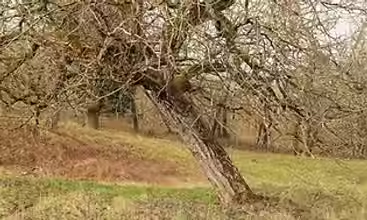
STRUCTURAL PROBLEMS & UGLY GROWTH
Trees can grow lopsided or too dense, leading to weak branch attachments, breakage, and a misshapen appearance.

POOR TREE HEALTH
Unpruned trees can develop disease, pest issues, decay, and stressed branches from overcrowding or rubbing limbs.
.avif)
SAFETY HAZARDS
Dead, weak, or overextended limbs can fail-especially during storms-risking damage to homes, vehicles, and people.

THE BEST TIME TO PRUNE TREES
The ideal time to trim or prune most trees is from late fall through early spring. Even better, pruning during dormancy-late fall or winter- can support disease prevention and often makes the job more efficient.
TO KEEP YOUR TREES IN TOP SHAPE, IT HELPS TO UNDERSTAND:
✦ Common pruning methods and what each one achieves
✦ The best timing for fruit tree pruning
✦ When to avoid pruning oaks
✦ How to properly prune young trees
Pruning at the right time protects long-term tree health and sets your landscape up for strong, vigorous growth.
UNDERSTANDING THE COST OF TREE TRIMMING & LIMB REMOVAL
Tree pruning and branch removal cost vary based on the tree and the conditions on your property. To provide an accurate quote, one of our arborist can visit your site at no charge to evaluate your trees and the surrounding landscape.
WHEN BUILDING AN ESTIMATE, COMMON FACTORS INCLUDE:
✦ Location
✦ Safety and risk concerns
✦ Tree type
✦ Time requirements
